How Boyo Infrastructure Projects Will Impact Cameroon Real Estate in 2026
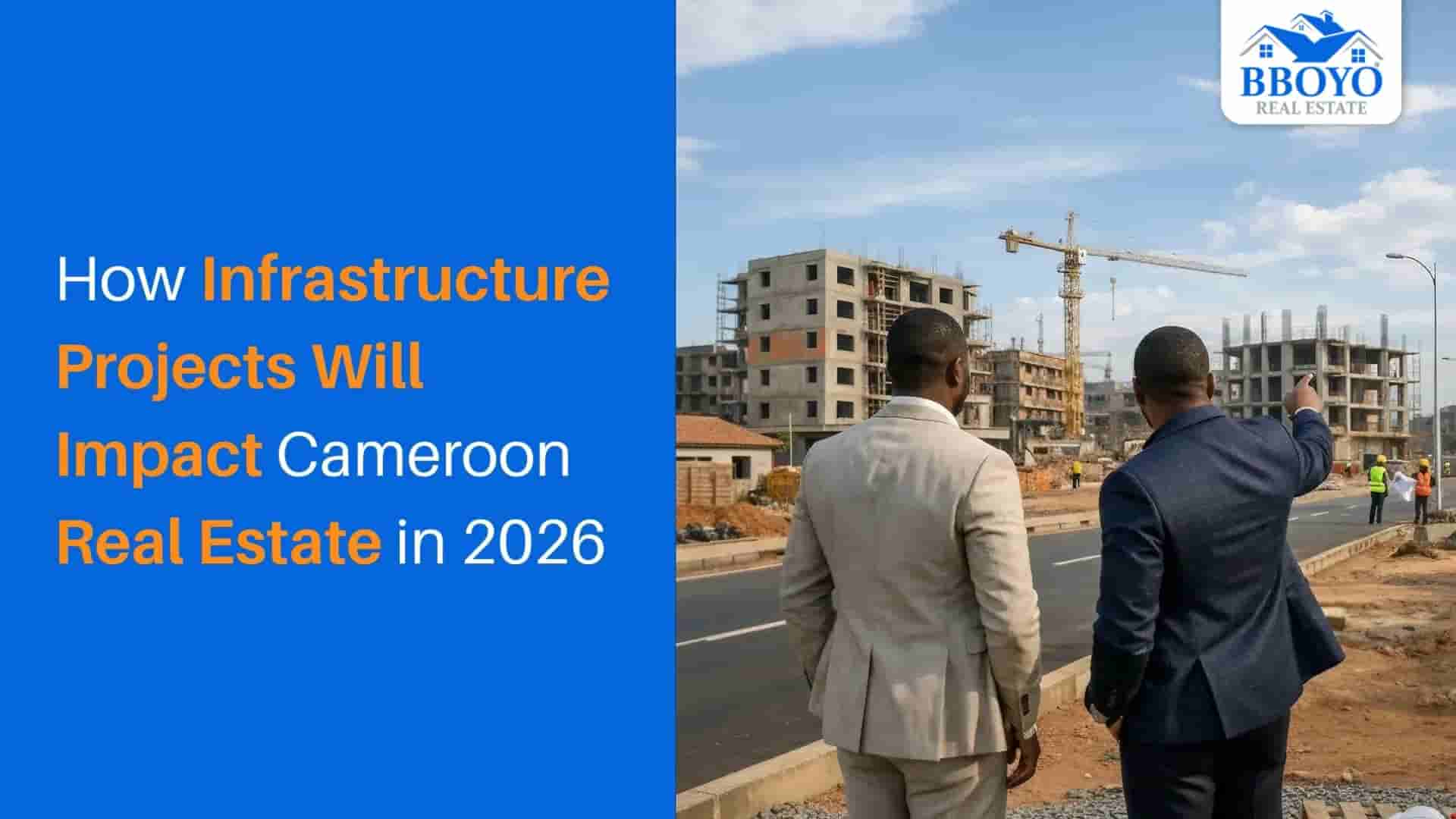
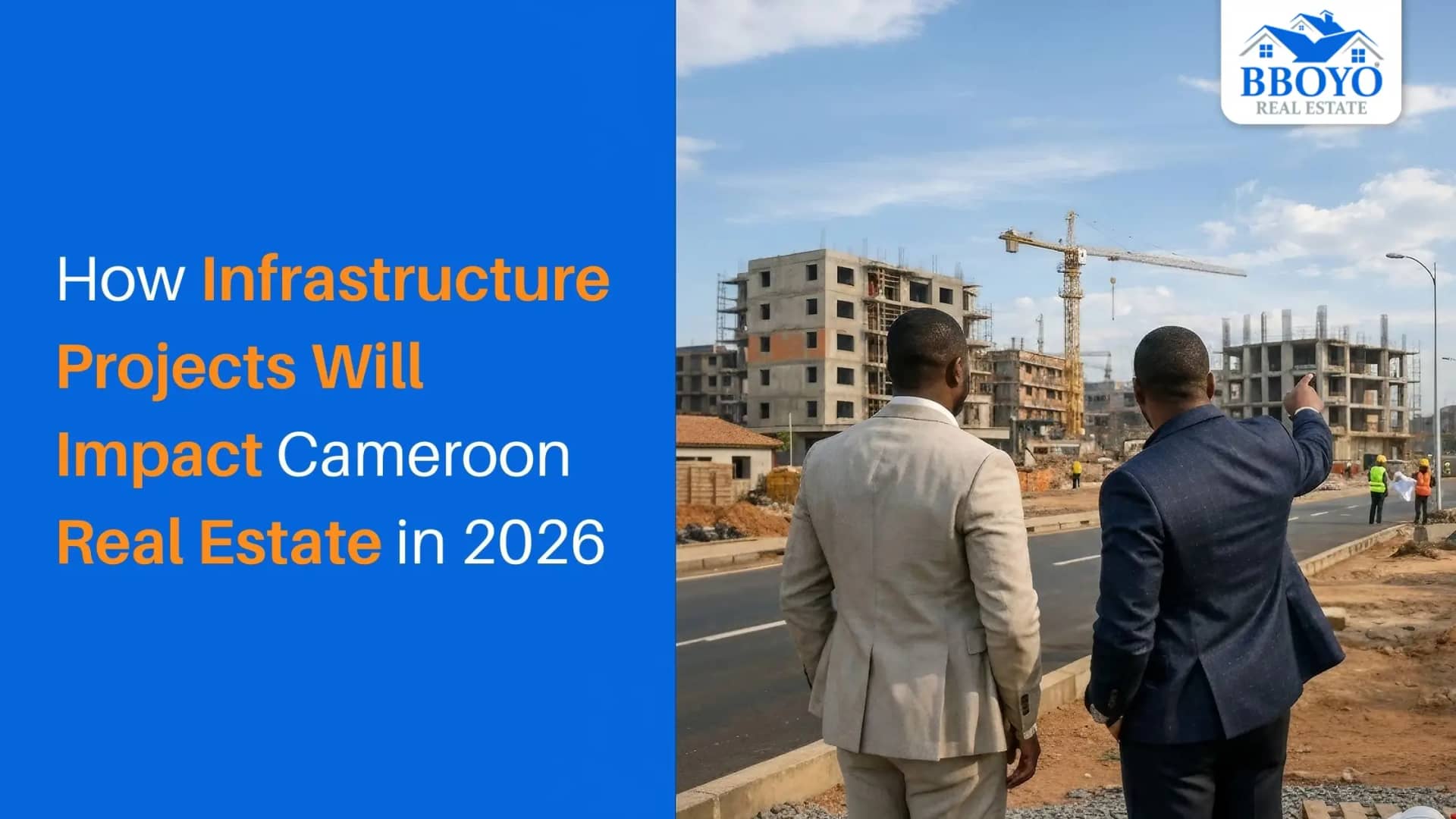
Overview of Major Infrastructure Projects in Cameroon in 2026
Most real estate investors in Cameroon obsess over location. Real Estate in Cameroon is entering an infrastructure-driven pricing cycle, where investments in transport, ports, and energy are altering accessibility economics before physical completion.
Street names. Current rents. Comparable sales. Very few look thirty kilometers out, past the last paved road, toward what’s being built rather than what already exists. That gap is where the market misprices risk -- and opportunity.
Consider the Douala–Yaoundé corridor. More than $2.3B in announced and partially funded infrastructure capital has accumulated there over the last five years. Highways, logistics upgrades, energy systems. Yet land prices in several adjacent zones still trade as if none of that capital exists. Not discounted. Not repriced. Just ignored.
This contradiction is the starting dissonance most investors miss. Cameroon infrastructure projects 2026 are not abstract plans; they are visible, phased, and increasingly funded. The market, however, remains anchored to present conditions rather than future functionality.
Relationship Between Infrastructure Development and Real Estate Growth
Cameroon construction and development activity is accelerating in places that don’t yet “feel” investable. The market is anchored to today’s commute times, today’s utility constraints, and today’s tenant profiles. Infrastructure operates on a different clock.
When you map Cameroon infrastructure projects 2026 realistically, patterns emerge. The Trans-Cameroon Highway sections connecting Douala to Yaoundé are partially funded and actively under construction, with staggered completions stretching into late 2026. The Kribi Deep Sea Port expansion -- Phase II -- is further along, increasing container capacity by roughly 340%. Energy systems, particularly the Lom Pangar hydropower expansion, are less visible but more decisive for development density.
This is the core impact of infrastructure on real estate: behavior changes before prices do.
Impact of Road and Highway Projects on Property Values
Transportation networks change commute mathematics. That alone reshapes land economics.
Road and transport projects in Cameroon are being executed in favor of commercial and industrial property first. Residential follows later -- typically 18–24 months -- once employment nodes, retail, and services anchor the corridor.
When the Yaoundé Ring Road reaches functional completion (currently projected around Q3 2026), commute times from satellite towns like Nkolbisson and Olembé will compress from 80–90 minutes to closer to 35. That single variable redraws the residential feasibility map overnight. Developers recalculate unit economics immediately. Buyers lag.
This is why road and transport projects Cameroon executes rarely produce immediate residential price spikes -- but they do create predictable sequencing advantages.
Influence of Port and Logistics Infrastructure on Commercial Real Estate
Ports operate on a faster feedback loop.
The Kribi Deep Sea Port expansion is not marginal capacity; it’s a structural shift. Container volume scaling 3–4x creates secondary bottlenecks: warehousing, cold storage, and last-mile industrial space within a 20–40 km radius.
That’s why industrial parcels south of Kribi that traded flat two years ago are now changing hands at infrastructure-adjusted prices. Infrastructure and property prices move together -- but not simultaneously.
Logistics operators secure land years before headline rents adjust. Residential investors who ignore this sequence consistently arrive late.
Role of Rail and Public Transport Projects in Urban Property Demand
Rail sits in a different credibility tier.
The proposed Yaoundé–Douala rail corridor remains aspirational, with timelines pointing to 2027–2029 at best. Yet pricing signals already exist. Properties within roughly three kilometers of proposed stations show speculative premiums. At five to seven kilometers, the market remains asleep.
That pricing spread reflects belief, not certainty. Smart capital prices believe probabilistically -- a core principle of real estate investment impact analysis.
Effects of Energy and Utility Infrastructure on Real Estate Development
Energy infrastructure rarely headlines real estate conversations, yet it quietly caps or unlocks density.
Before Lom Pangar’s expansion, several zones simply couldn’t sustain higher-rise development due to unreliable power. Post-expansion, feasibility models change. Developers respond first. Zoning follows. Buyers arrive last.
This is why government projects Cameroon real estate investors should track are not limited to transport. Energy reliability determines what can be built -- not just where.
Infrastructure Growth and Residential Housing Demand in Cameroon
Infrastructure growth and residential housing demand in Cameroon track with a 12–24 month delay.
Migration increases as employment nodes form. That migration pushes rents, but also construction costs. Early movers lock cost basis before labor and materials reprice. Late movers compete in inflated markets.
Most investors misread proximity as demand. Demand follows services, employment, and commute compression -- not ribbon cuttings.
Impact of Smart City and Urban Development Projects on Real Estate
Smart city initiatives under urban development Cameroon 2026 programs add optionality rather than immediate yield.
They are longer-duration bets, often underfunded initially, but capable of generating asymmetric upside if political follow-through materializes. Early positioning around planned urban clusters in Douala and Yaoundé isn’t about current cash flow. It’s about owning optionality cheaply.
Not all announcements deserve attention. Not all deserve dismissal. Professional investors weigh them by funding source, political capital, and execution history.
Investment Opportunities Created by Infrastructure Expansion
Infrastructure creates temporary value destruction during construction -- noise, access issues, uncertainty -- followed by asymmetric upside post-completion.
Most investors flee during the first phase and re-enter after stabilization. Returns concentrate in between.
A warehouse 15 km from Kribi during port expansion, outperforms residential next door for two years straight. This is timing arbitrage, not location slogans. It’s how serious real estate growth Cameroon strategies are actually executed.
Long-Term Outlook for Real Estate in Cameroon After 2026
The market is catching up. Real estate pricing already reflects completed infrastructure in core zones. What it does not yet reflect are secondary and tertiary impact areas still operating under legacy assumptions.
That window narrows as 2026 approaches. Long-term real estate in Cameroon appreciation will be driven by infrastructure-enabled urban expansion rather than speculative demand alone.
Beyond next year, future real estate trends Cameroon will experience depend less on new announcements and more on cumulative completion. Properties acquired today based on infrastructure timelines -- rather than current cash flow -- consistently outperform over five-year horizons. Not marginally. By 40–60% in corridors where sequencing was understood early.
Six months ago, most investors treated infrastructure as background noise. Today, it’s becoming the foreground variable.
The question isn’t whether infrastructure reshapes real estate outcomes -- it already is. The question is whether you position before the market finishes repricing that reality.
Understanding which projects matter, which don’t, and how they intersect with your capital structure isn’t generic. It’s regional. Temporal. Specific.
That’s where real discovery begins.